









Frequently asked questions
Common questions about Nudge Security's SaaS supply chain security solution
What types of vulnerabilities does Nudge Security uncover in the SaaS supply chain?

Nudge identifies several kinds of risk: overly permissive OAuth grants; invisible integrations or chain dependencies (third- or fourth-party services) with weak or unknown security practices; vendor misconfigurations or gaps in compliance programs; lack of credential hygiene or identity risk; permissions and access paths that allow for lateral movement; and insufficient visibility over what upstream dependencies a vendor relies on.
What differentiates Nudge from traditional third-party risk management tools?
Traditional vendor risk assessments are often manual, one-off, or time-delayed; they may only cover direct vendors and skip vendor dependencies (4th parties), miss dynamic connectivity, or lack real-time breach feed or alerting. Nudge automates much of the mapping of supply chain (including upstream dependencies), OAuth permissions, breach alerts, and continuously monitors vendor risk posture. It also allows integrating these insights into workflows and automations, so risk isn’t just observed but remediated.
What is SaaS supply chain security?
SaaS supply chain security refers to protecting an organization from the risks and vulnerabilities that arise from its use of third-party SaaS vendors, and the vendors that those vendors rely on (i.e. 3rd-, 4th-, or even further parties). This includes understanding vendor security programs, breach histories, third-party dependencies, permission grants (OAuth etc.), integrations, and the potential blast radius if one vendor in the chain is compromised.
What breach alerts and real-time insights does Nudge provide?
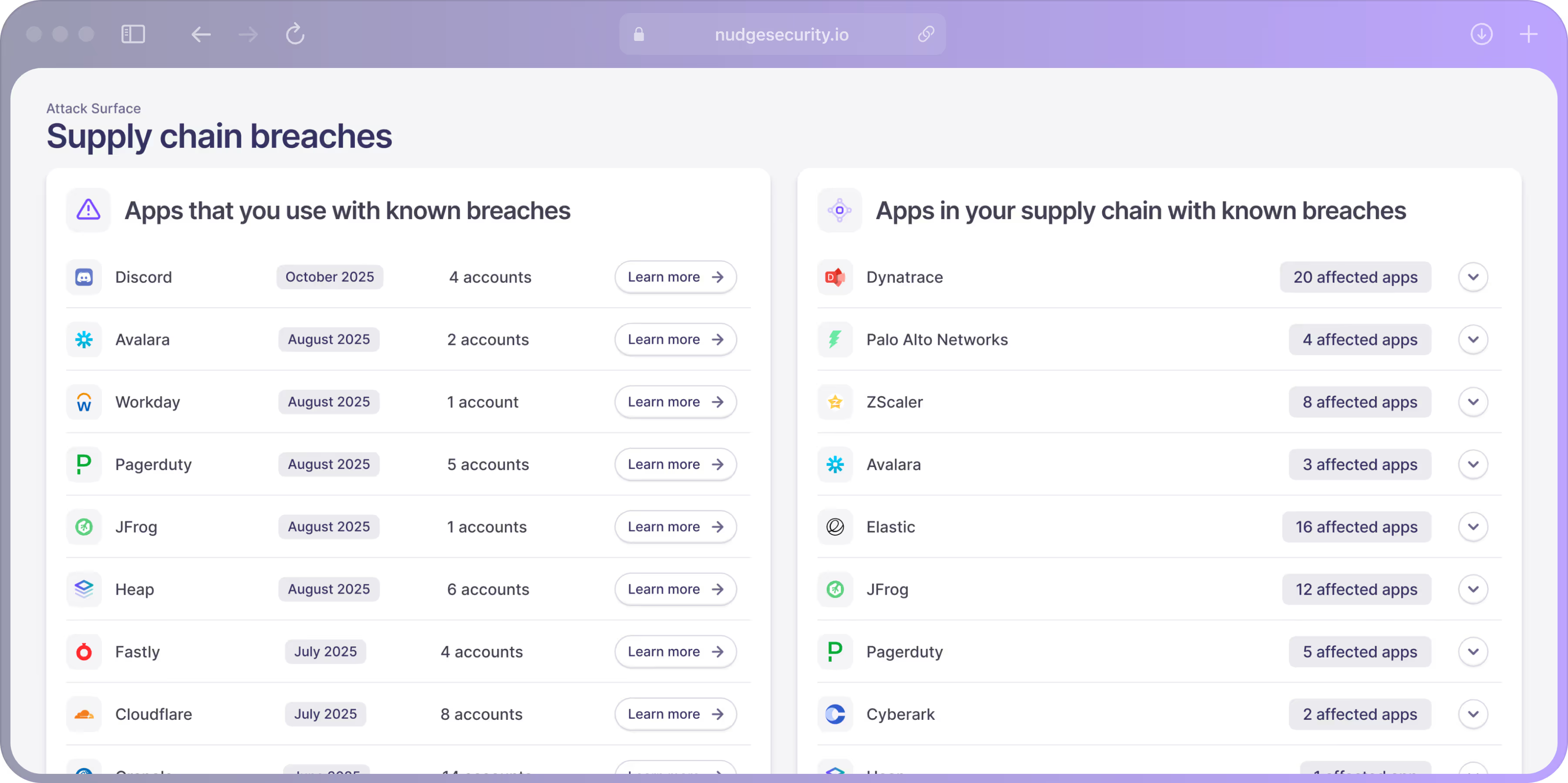
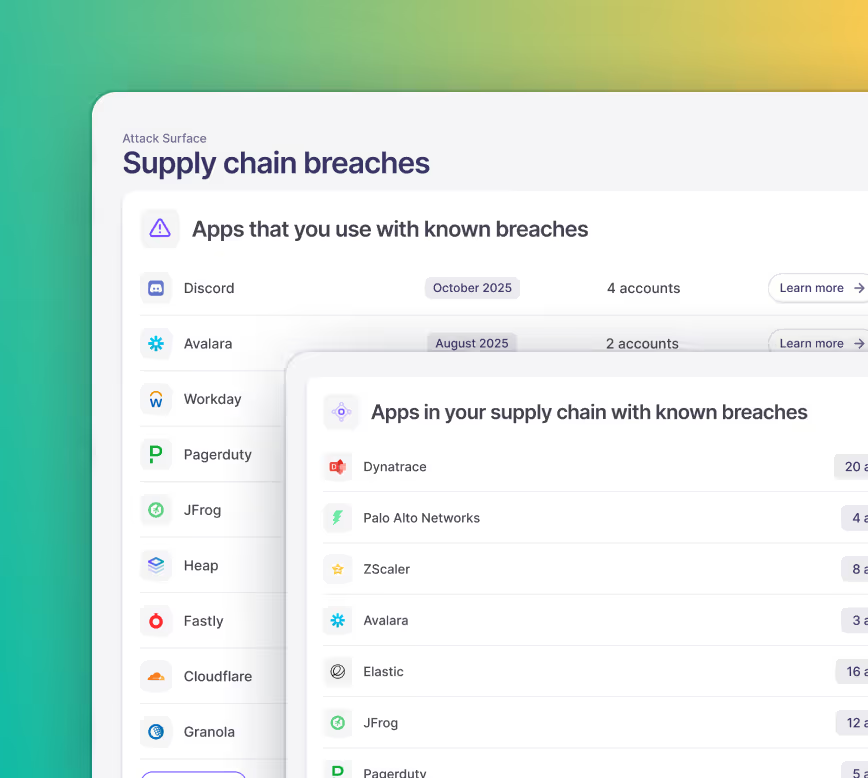
You receive real-time breach alerts when a vendor (or a vendor’s vendor) is subject to a data breach that could affect your organization. The platform includes detailed breach history for your SaaS providers, so you can assess which apps might be in the blast radius. It also helps you understand the scope of impact, so you can respond swiftly and appropriately.
What are the best practices for securing the SaaS supply chain, and how does Nudge enable them?
Best practices include maintaining continuous discovery and mapping of SaaS vendors and their dependencies; enforcing least-privilege permissions and auditing OAuth grants; monitoring vendor breach history; using automated alerts; integrating supply chain risk into procurement and vendor onboarding; and empowering employees with visibility and nudges for secure behavior (e.g. limiting risky permissions, avoiding unmanaged vendors). Nudge enables these by automating discovery, supplying vendor profiles and breach data, providing security-focused dashboards, enabling permission visibility, and offering remediation workflows and automation so you can operationalize best practices rather than just observe them.
Why is SaaS supply chain risk growing now?
Several trends are accelerating risk: rapid proliferation of SaaS tools, many adopted without oversight (shadow SaaS); increasing dependency on inter-vendor integrations and cloud services; SaaS providers themselves outsourcing services or depending on other SaaS providers; increased supply chain attacks in headlines; and regulatory/industry pressures for transparency. Collectively, these mean that an organization can be impacted by breaches or misconfigurations not just at vendors it directly contracts with, but upstream in that vendor’s supply chain.
How quickly can my organization see value when securing the SaaS supply chain with Nudge?
Very quickly. After deployment, you’ll see your SaaS inventory and vendor dependency mapping populate within minutes. OAuth permissions, vendor/breach-history data, and risk/capability assessments begin showing up shortly thereafter. Many organizations spot high-risk vendor dependencies or risky permissions within days, enabling early remediation.
How does this help with compliance, audit, and risk governance?
Knowing your full supply chain and vendor risk landscape makes audit response faster, supports compliance with regulations requiring vendor due diligence and breach disclosures, helps maintain a documented inventory of SaaS vendors and their upstream dependencies, enables policies and controls over OAuth access, allows continuous monitoring, and automates parts of risk management workflows. For audit or regulatory requests, being able to point to vendor breach histories, supply chain maps, and real-time alerting adds credibility and reduces manual effort.
How quickly can I discover AI use in my org?
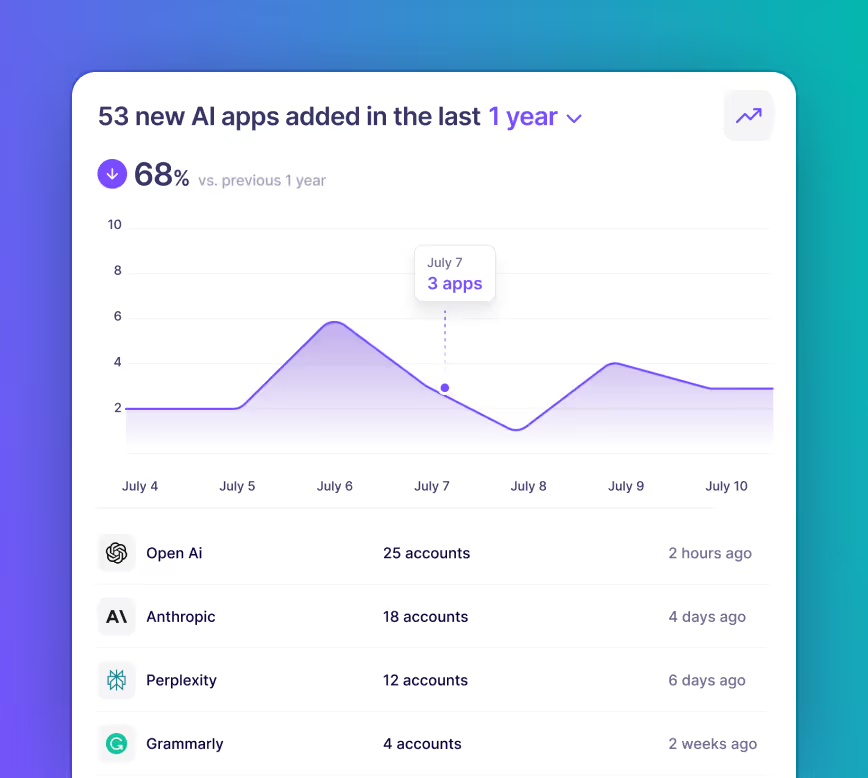
Most organizations can deploy Nudge Security in under an hour. Our platform integrates with your existing identity providers (Microsoft 365, Google Workspace, Okta, Azure AD) and doesn't require any endpoint agents or network proxies. You'll start receiving insights about AI tool usage immediately after deployment, allowing you to take action from Day One.
How does Nudge Security help map and assess the SaaS supply chain?
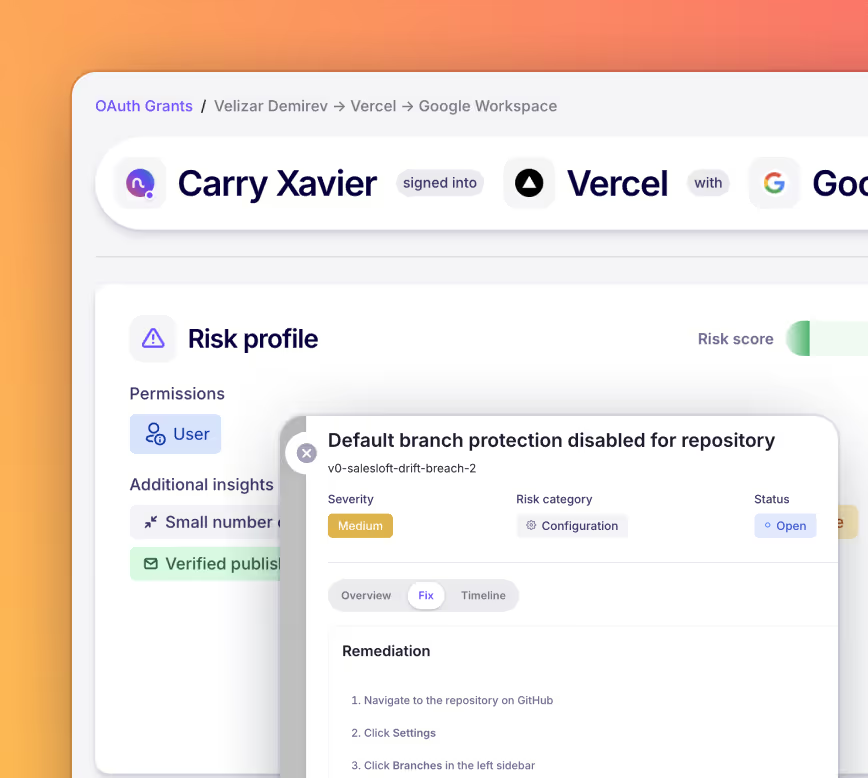
Nudge Security provides automated discovery and continuous mapping of your SaaS supply chain including downstream and upstream dependencies. It surfaces vendor security reviews, breach history, risk & compliance data for both direct vendors and their own vendor dependencies (4th parties). It also reveals permissions via OAuth, shows how apps are connected (which employees granted what access), and categorizes vendors to help filter by type and risk.
How accurate and complete is the supply chain visibility? What are the limitations?
Nudge aims to provide high fidelity visibility via multiple data sources: vendor metadata, breach history, OAuth and identity/permission data, direct vendor security and compliance program information. That said, gaps can exist: some vendors may not publish complete security data; some dependencies may be proprietary or opaque; some breach disclosure delays may affect timeliness; some integrations or vendor-vendor linkages might be hidden or not detectable by public or accessible metadata. Nudge surfaces confidence and gaps so security teams can prioritize remediation where risk is highest.